Fairytale Color by number game
- 4.9
- Rating
- 1.00M
- Installs
- Free
- Price
 Analysis by App-foxy
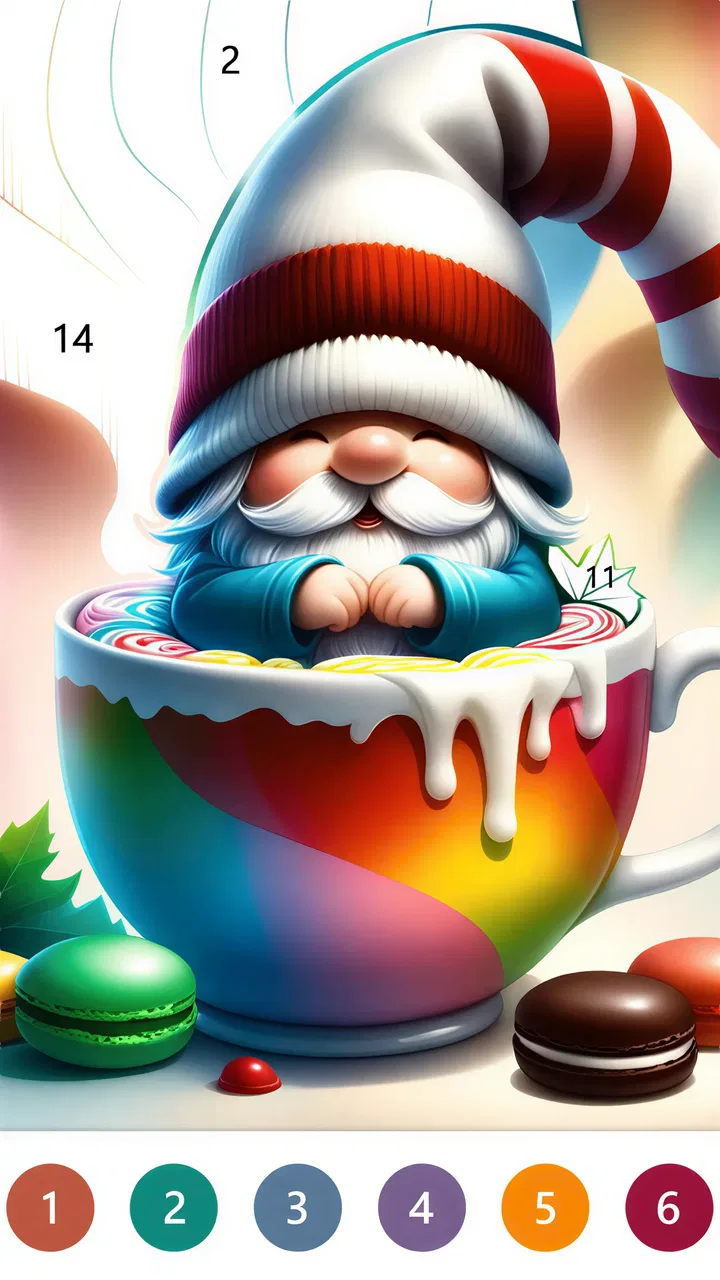
I found Fairytale Color to be a gentle board-style coloring game built around illustrated fantasy scenes rather than competition or fast reactions. Its appeal is easy to understand: you choose a picture, match colors to numbered areas, and gradually turn a plain outline into a finished fairytale image. I spent time with it as the kind of game I would open during a quiet break, and that is where it makes the most sense. It is simple to begin, visually focused, and suitable for a broad audience, but it is not trying to replace a deep puzzle game or a traditional strategy board game.
The game is free to download, with optional in-app purchases listed from $4.99 to $49.99 per item. That purchase range is important when deciding whether it fits your habits. The core attraction is the coloring activity itself, while spending is something to consider separately rather than an automatic part of playing. My overall impression is positive, especially for people who want a calm creative pastime, though readers who dislike numbered coloring or prefer more demanding gameplay may find it too limited.
How the fairytale coloring experience works in everyday use
I find the best way to judge Fairytale Color is to notice how its guided, numbered coloring fits into a real break rather than expecting a traditional board-game session. In this section, I’ll look at the small choices that make a picture feel manageable and satisfying, then turn to what happens when I play for longer or return to it across several pauses.
You May Also Like

 Blood Strike: 2.5 Anniversary
Blood Strike’s Loadouts Turn Every Drop Into a Tactical Gamble
A close look at Blood Strike’s custom loadouts: how fast access to signature weapons reshapes its battle royale rhythm, rewards preparation, and narrows the gap between fights.

 Pandora - Music & Podcasts
Pandora’s Music Is Easy to Start, but Harder to Recover
Pandora’s strength is its low-effort path from a seed to a station. Its weak spot is how much confidence it asks you to place in connection, setup, and quiet recovery.

 8 Ball Pool
 Is Built on Rivalries, Rematches, and Routine
A close look at the rivalries, rematches, shared routines, and unanswered safety questions that turn a quick pool match into a persistent mobile community.

 Samsung Music
’s Quiet Strength Is Playing What You Already Own
Its reach comes less from spectacle than from dependable access to a personal library. That simplicity is both the app’s strongest retention engine and its ceiling.

 AccuWeather: Weather Radar
AccuWeather Review: A Quick, Clear Forecast for Everyday Decisions
For everyday plans, the best forecast is the one you can understand quickly. AccuWeather makes rain timing, radar, and local conditions easy to act on, with a few trade-offs.

 Hill Climb Racing
Why Hill Climb Racing Still Turns Crashes Into One More Run
A tiny car, a bumpy hill and one more upgrade: Hill Climb Racing keeps resurfacing because its simple chaos makes every near-miss feel personal.
More From Our News Desk



A calm format that is easy to pick up
The strongest part of Fairytale Color is its low barrier to entry. I do not need to learn a complicated ruleset before starting, and the numbered format gives each picture a clear next step. Instead of wondering what to do with a blank canvas, I can follow the marked sections and watch the scene develop. That makes it a comfortable choice for a short session when I want something more engaging than scrolling but less demanding than a competitive game.
The fairytale setting also gives the activity a distinct mood. Scenes with magical characters, storybook surroundings, and decorative details feel more inviting than a collection of purely abstract patterns. The artwork is the reason to keep moving from one section to the next. I found that the satisfaction comes less from solving a difficult problem and more from seeing small areas combine into a complete picture.
This makes the game particularly suitable for a quiet evening, a waiting-room break, or a few minutes after work. A realistic routine would be opening it while having tea, completing several small areas, and stopping before the activity begins to feel repetitive. Because the basic action is so straightforward, it does not demand the same concentration as a word puzzle or a board game against another person.
What the numbered format does well
Numbered coloring provides useful structure for players who enjoy creative activities but do not feel confident choosing colors independently. The game guides the decision-making, so I can focus on careful completion rather than artistic technique. That is also why it can work for younger users and casual players. The content rating is Everyone, which matches the approachable tone and family-friendly presentation.
There is a small strategic element in deciding where to work next. I usually prefer clearing a visually important object first, such as a character or a bright foreground detail, because the scene begins to look finished sooner. Another useful approach is to handle clusters of the same number while the color is already in mind. This reduces the feeling of searching across the whole image and makes a larger illustration more manageable.
That workflow is one of the better ways to avoid fatigue. Rather than trying to complete every tiny section in one sitting, I treat each scene as a series of short milestones. It also helps when a picture contains many similar details. The game remains relaxing when I control the pace; it becomes less enjoyable if I approach it like a task that must be cleared immediately.
Where the simplicity becomes a limitation
The same accessibility that makes Fairytale Color welcoming can make it feel shallow to players who want meaningful choices. The numbered system guides the color placement, so it does not offer the freedom of a blank digital canvas. I cannot treat each image as my own composition in the way I could with a drawing application. The creative satisfaction comes from completion and presentation, not from inventing the image.
It is also not the right choice for someone looking for a traditional board experience with tactics, opponents, or changing rules. Its board classification describes the broad game category, but the actual activity is closer to a structured coloring pastime than a match of chess, checkers, or a card game. If your idea of a board game involves planning several turns ahead, Fairytale Color will probably feel too passive.
Players who dislike repetitive tapping should think about that before installing it. The fantasy artwork adds variety, but the central action remains consistent. I would recommend it to someone who values calm repetition, while I would point an action fan or a serious puzzle enthusiast toward a game with more interaction and consequence.
Progress without turning relaxation into pressure
One thing I pay attention to in this kind of game is whether progress feels encouraging or demanding. Fairytale Color works best when I use completion as a personal reward rather than chasing an imagined performance target. Finishing a section gives the picture more shape, but the experience does not need to become a race. That distinction matters for children, tired adults, and anyone using the game to unwind.
A practical habit is to stop at a natural visual boundary. Completing a character, a building, or a prominent decorative object can feel more satisfying than stopping in the middle of a large background. I also found it useful to leave less interesting repetitive areas for later, once the main image already has enough color to feel rewarding. This is a small change, but it keeps the session from becoming a long search for isolated numbered spaces.
The game is best approached as a collection of small creative pauses. If I expect constant novelty, I may become impatient. If I expect a soothing activity with visible progress, the design makes more sense. That difference in expectation is probably the biggest factor in whether a new player enjoys it.
Fairness and the role of spending
Fairness deserves a direct look because the game is free to download but includes optional purchases priced from $4.99 to $49.99 per item. I would not describe the purchase model as automatically unfair simply because those options exist. The more useful question is whether a player can enjoy the coloring concept without feeling pushed to spend. From my perspective, anyone considering the game should decide in advance whether they want a strictly free experience or are comfortable paying for extras if they appear attractive.
I would approach the purchase screen with the same care I use in any free game: check what an item actually provides, avoid buying during a moment of impatience, and involve a parent or account holder when a child is playing. A free entry point is helpful, but it does not mean every available part of the experience is included at no cost. The listed range is wide enough that casual users should treat purchases as a deliberate decision, not as a small automatic add-on.
For me, the fairest way to use it is to judge the free experience on its own first. I would play enough to decide whether the coloring loop genuinely relaxes me before considering any optional item. If the basic activity already feels repetitive, spending is unlikely to solve that underlying issue. If I enjoy the artwork and want additional convenience or content, I can then make that choice with clearer expectations.
Competitive fairness is mostly about expectations
Fairytale Color is not a head-to-head game in the way a competitive board title is. There are no meaningful opponents in my experience, so fairness is less about matchmaking or equal tactical resources and more about whether the game respects a player’s time and spending boundaries. That makes it a poor choice for someone searching for rankings, social rivalry, or a test of skill against another person.
Its noncompetitive nature is also a strength for families who want an activity without winners and losers. A parent and child can look at the same finished scene and talk about the details rather than arguing over a result. The Everyone age rating supports that broad audience, although adults should still manage purchases on shared devices instead of assuming that a child will understand the difference between free play and paid options.
Compared with ordinary coloring books, the game offers more guidance and a more interactive sense of completion. Compared with drawing apps, it offers much less creative control. Compared with puzzle or strategy board games, it has almost no competitive pressure. Those comparisons clarify its place: it is a guided digital coloring experience with fairytale presentation, not a universal substitute for every kind of board entertainment.
What I would want to know before installing
The game was released on November 22, 2023, and the current version is 2.1.6. It requires Android 8.0 or later, so compatibility is straightforward for devices running that operating system or a newer one. I would still check the device before downloading, especially if I am installing it on an older phone or tablet. The game is developed by LoveColoring Game, and its focus is clearly centered on accessible coloring rather than a broad collection of unrelated modes.
Its audience reach is substantial: it has passed one million installs, with an average rating of 4.9 from around thirty-one thousand ratings and roughly two thousand reviews. Those figures suggest that the basic concept connects strongly with many players, but they should not replace personal judgment. A high average can tell me that the format is popular; it cannot tell me whether I personally enjoy repetitive coloring or whether the purchase approach suits my household.
Another practical question is whether this is a good choice for children. The Everyone rating and simple interaction make it approachable, but I would not hand over a shared device without checking purchase controls first. The important distinction is between suitability of the subject matter and supervision of spending. A game can be age-appropriate while still requiring an adult to manage optional purchases.
I would also ask whether the game fits the kind of attention I have available. It works well when I want a quiet, visually guided activity. It is less suitable when I have only a few seconds, need a strong mental challenge, or want a story with active choices. Knowing that before installation prevents disappointment and helps place it alongside, rather than above, other games on the phone.
Three useful ways to get more from each picture
My first tip is to use visual landmarks as stopping points. Completing a recognizable object gives a stronger sense of progress than filling random spaces, so I begin with the most prominent part of the scene when I need a quick reward. This is especially helpful during short breaks, when I want to leave the game feeling that I accomplished something rather than merely tapped through scattered details.
My second tip is to group work by color or number only when the image makes that practical. On a dense illustration, searching for every matching area can become tiring. I prefer to finish a nearby cluster, then move to another visible cluster, instead of scanning the entire picture repeatedly. This keeps the activity calmer and reduces the visual clutter that can make small sections easy to overlook.
My third tip is to separate free enjoyment from purchase temptation. I would first establish a personal stopping rule, such as completing a few scenes or playing across several short sessions, and then decide whether the game still feels fresh. That gives me a better basis for judging value than buying immediately because a locked or appealing element catches my attention. It is a simple habit, but it makes the spending decision more deliberate.
These approaches also reveal the game’s trade-off. Fairytale Color can be pleasantly absorbing when I choose my own rhythm, yet it does not provide much depth beyond the coloring loop. The artwork and orderly progress carry the experience. If those are enough for me, the simplicity is an advantage. If I need evolving mechanics, the same simplicity becomes the reason to look elsewhere.
My trust verdict for casual players
I would recommend Fairytale Color to a friend who wants a free, family-friendly coloring game with a magical theme and a relaxed pace. The high average rating and large install base indicate that the approach has found an audience, while the Android requirement and current version make it a practical option for compatible devices. I especially see it working for short evening sessions, quiet family use, or anyone who likes completing detailed pictures without having to draw them from scratch.
I would be more cautious about recommending it to competitive players, serious artists, or people who want a completely open-ended creative tool. The numbered format limits artistic freedom, and the repetitive interaction will not satisfy everyone. I would also tell a friend to treat the optional purchases carefully: the game is free to start, but individual items range from $4.99 to $49.99, so spending should be intentional and supervised on shared devices.
My final view is that the game earns its place as a soothing fairytale coloring activity, not as a deep board challenge. Its trustworthiness depends less on competition and more on clear personal boundaries around time and purchases. If you want guided creativity rather than demanding strategy, it is worth trying for free before deciding whether it belongs in your regular rotation. That approach gives the game a fair chance while keeping expectations, and spending, under control.
FAQs for Fairytale Color by number game
01What is Fairytale Color by Number?
Fairytale Color by Number is a relaxing coloring game built around magical illustrations, including princesses, castles, animals, enchanted landscapes, and other storybook scenes. Players fill numbered sections with the matching colors to complete each picture. It is designed for casual play, creative expression, and stress relief rather than competition or complex gameplay, making it suitable for short sessions or longer coloring breaks.
02How does the coloring system work?
Each picture is divided into small numbered areas, and every number corresponds to a specific color in the palette. You select a color and tap the matching sections to gradually complete the artwork. The game generally helps locate unfinished areas, which is useful when details are difficult to see. Hints or assistance features may also be available, although some options can depend on the version or in-app settings.
03Can Fairytale Color by Number be played offline?
Many coloring pages can usually be enjoyed without a continuous internet connection once they have been downloaded, which makes the game convenient for travel or areas with limited service. However, internet access may still be needed for downloading new artwork, displaying advertisements, synchronizing progress, or using certain online features. It is best to open the desired pages while connected before relying on offline play.
04Is Fairytale Color by Number free to download and play?
The game can generally be downloaded at no initial cost, but free access may include advertisements, locked coloring pages, optional hints, or other limitations. Some content or convenience features may require in-app purchases, depending on the edition available on Android or iOS. Before downloading, review the store listing and purchase information, especially if the game will be used by children.
05Is Fairytale Color by Number appropriate for children?
Fairytale Color by Number can be appealing to children because of its colorful fantasy artwork and simple tap-based controls. Nevertheless, parents should check the age rating, advertising policy, and available in-app purchases before allowing independent use. Some images may be more detailed than expected, and younger children could accidentally interact with ads or purchase prompts, so parental supervision and device restrictions are recommended.
Pros
- Simple color-by-number gameplay suitable for relaxing breaks.
- Fairytale artwork offers a charming theme for children and adults.
- Clear numbered sections make most pictures easy to complete.
- Progressive illustrations provide a satisfying sense of achievement.
- Works well as a quiet
- low-pressure creative activity.
Cons
- Some detailed pictures can feel repetitive to finish.
- Small sections may be difficult to tap accurately on phones.
- The fairytale theme may not appeal to every player.
- Completing larger images can require considerable screen time.
- Some content or features may depend on ads or in-app purchases.

Fairytale Color by number game
Gallery